
Brent Ingard
Super friendly, quick, and knowledgeable. Definitely recommend.
Fit-outs, oil and gas, tenant improvements, scheduled around your operating hours
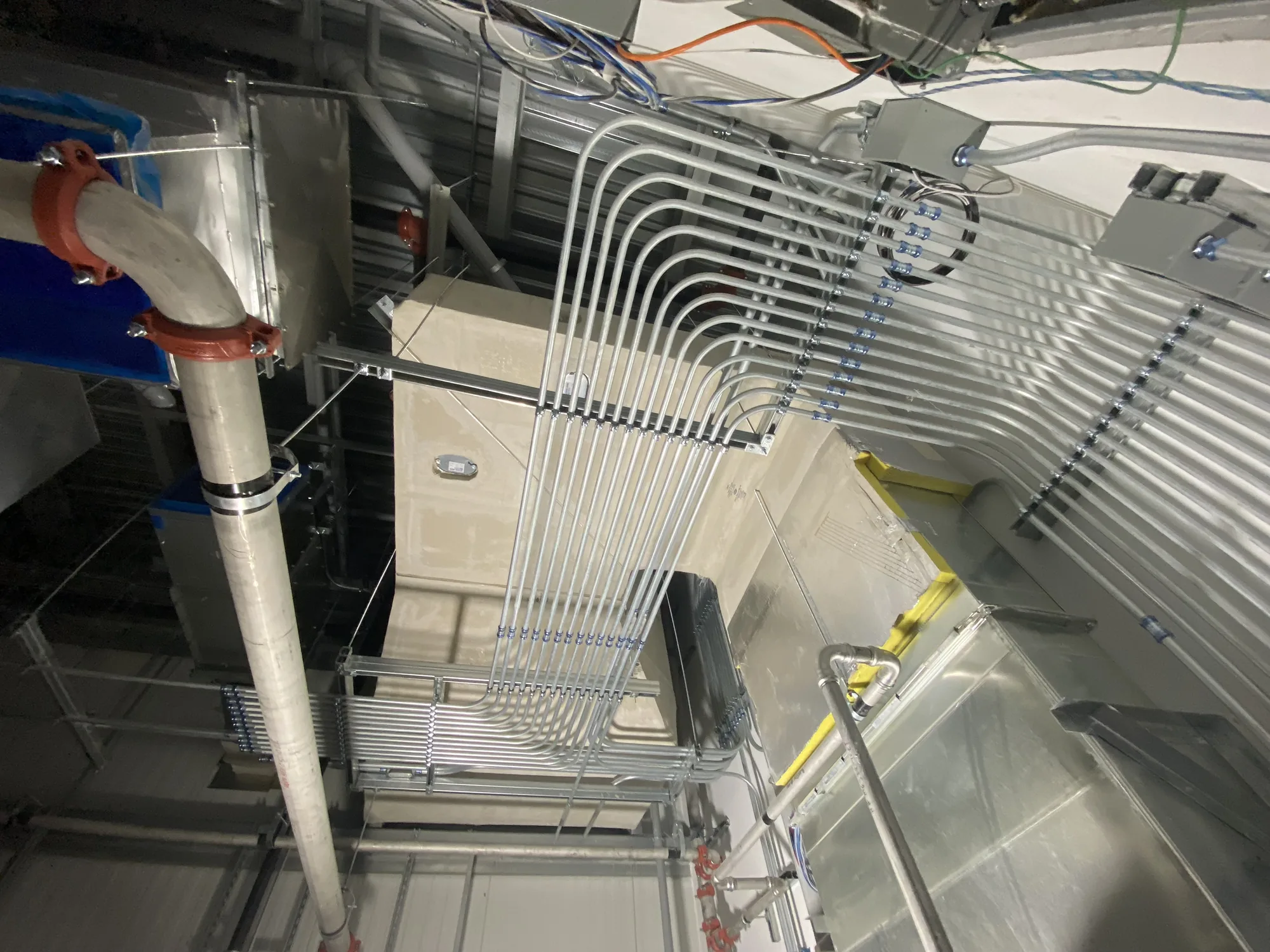
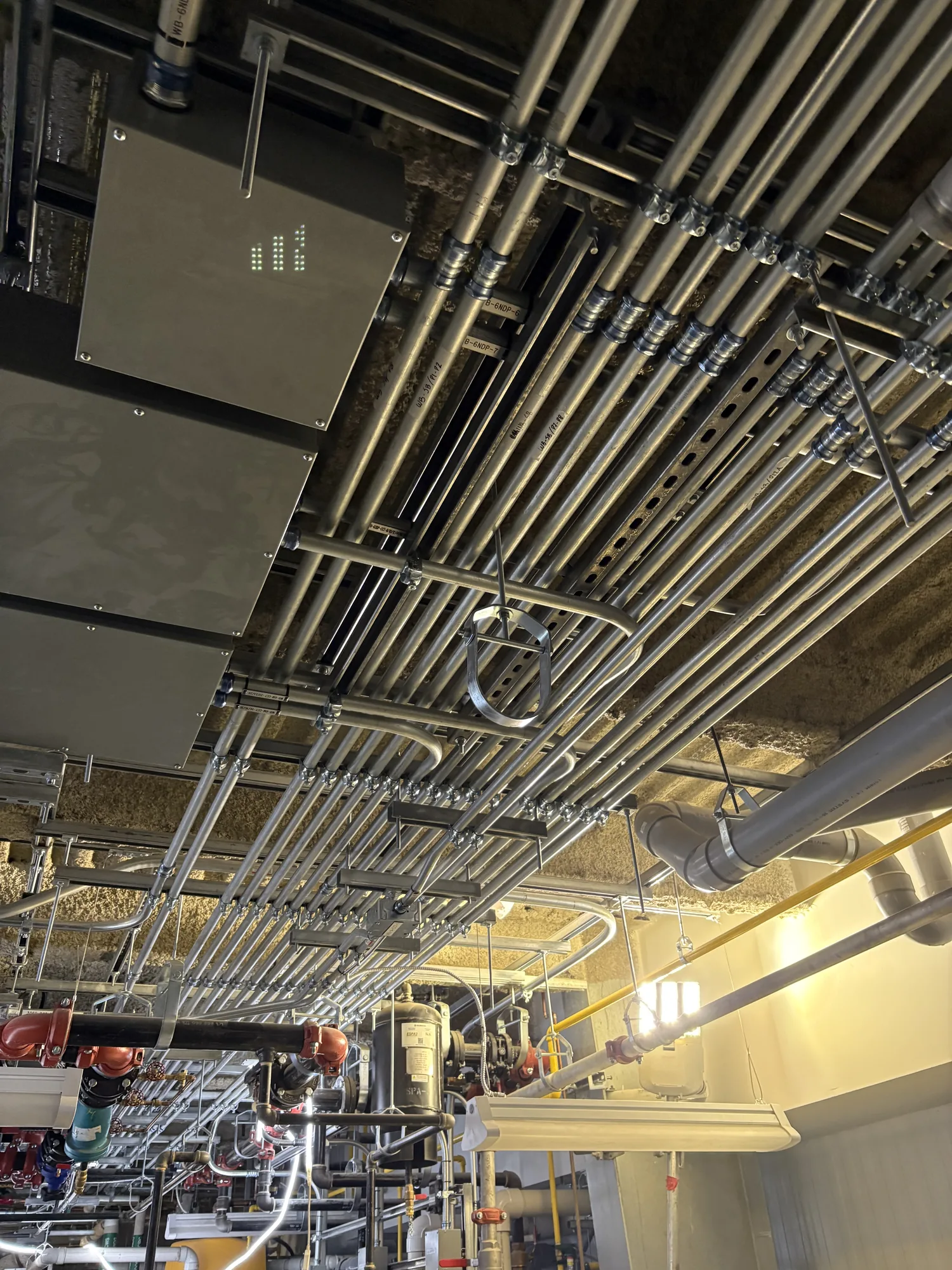
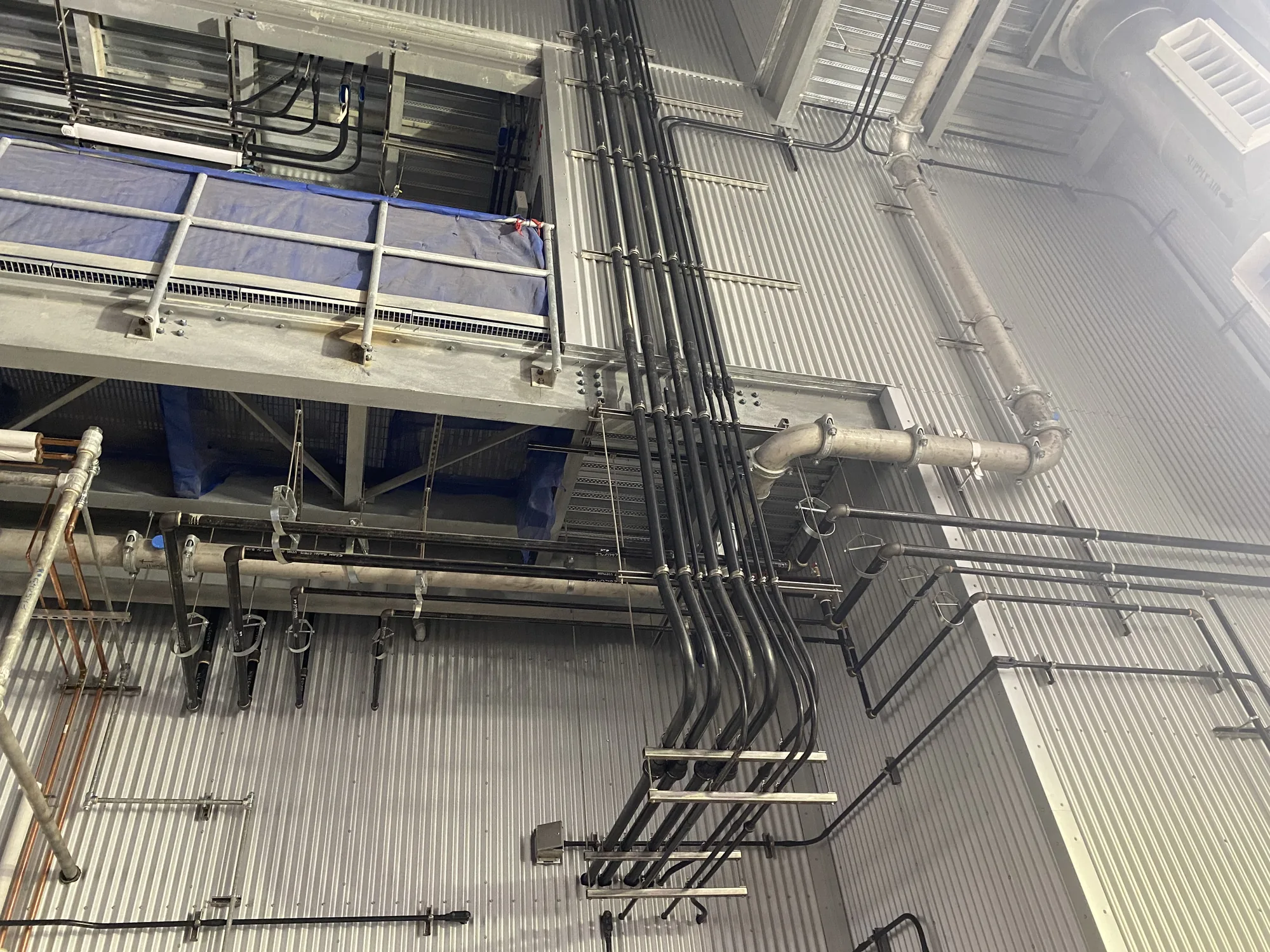
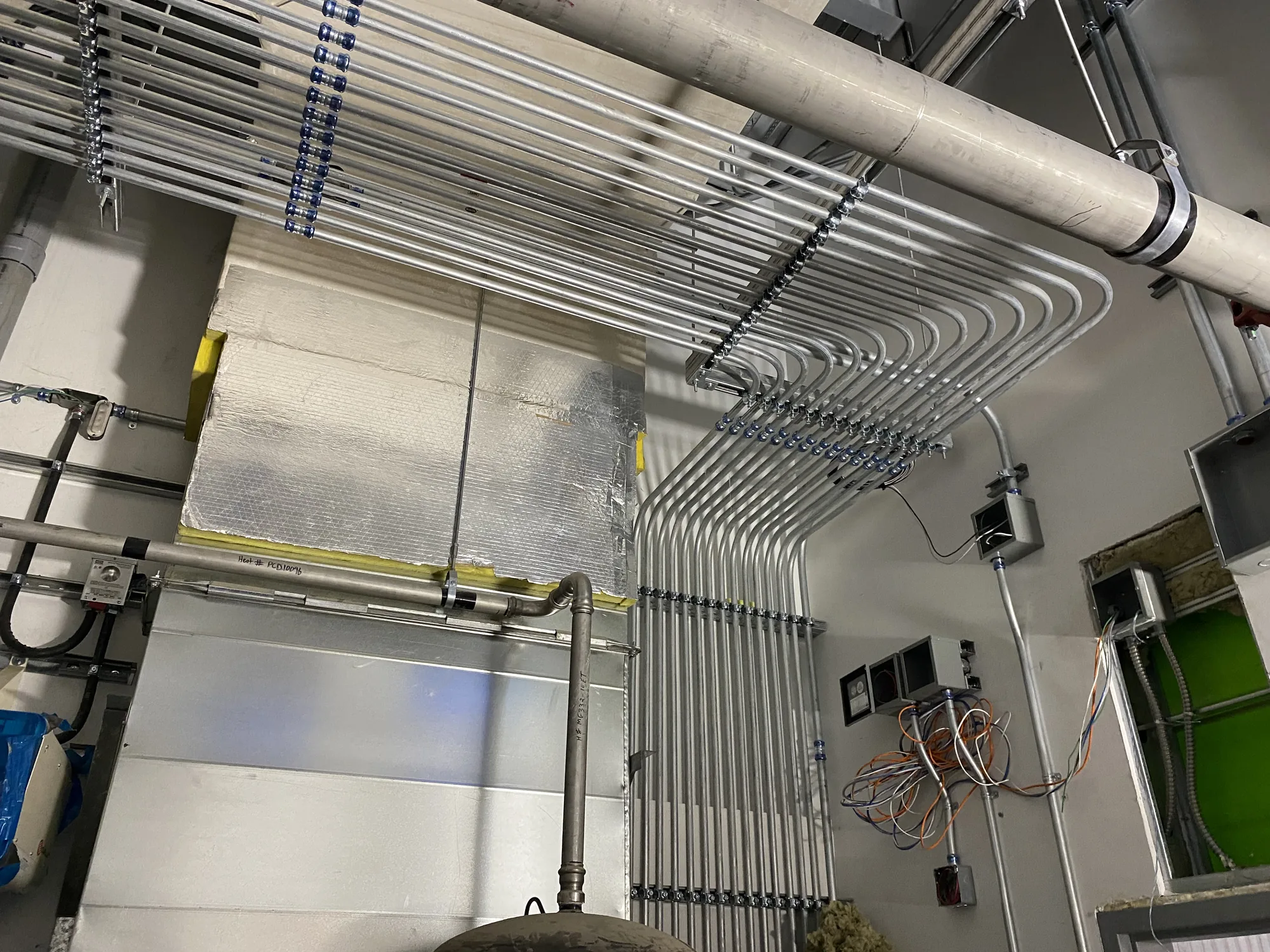
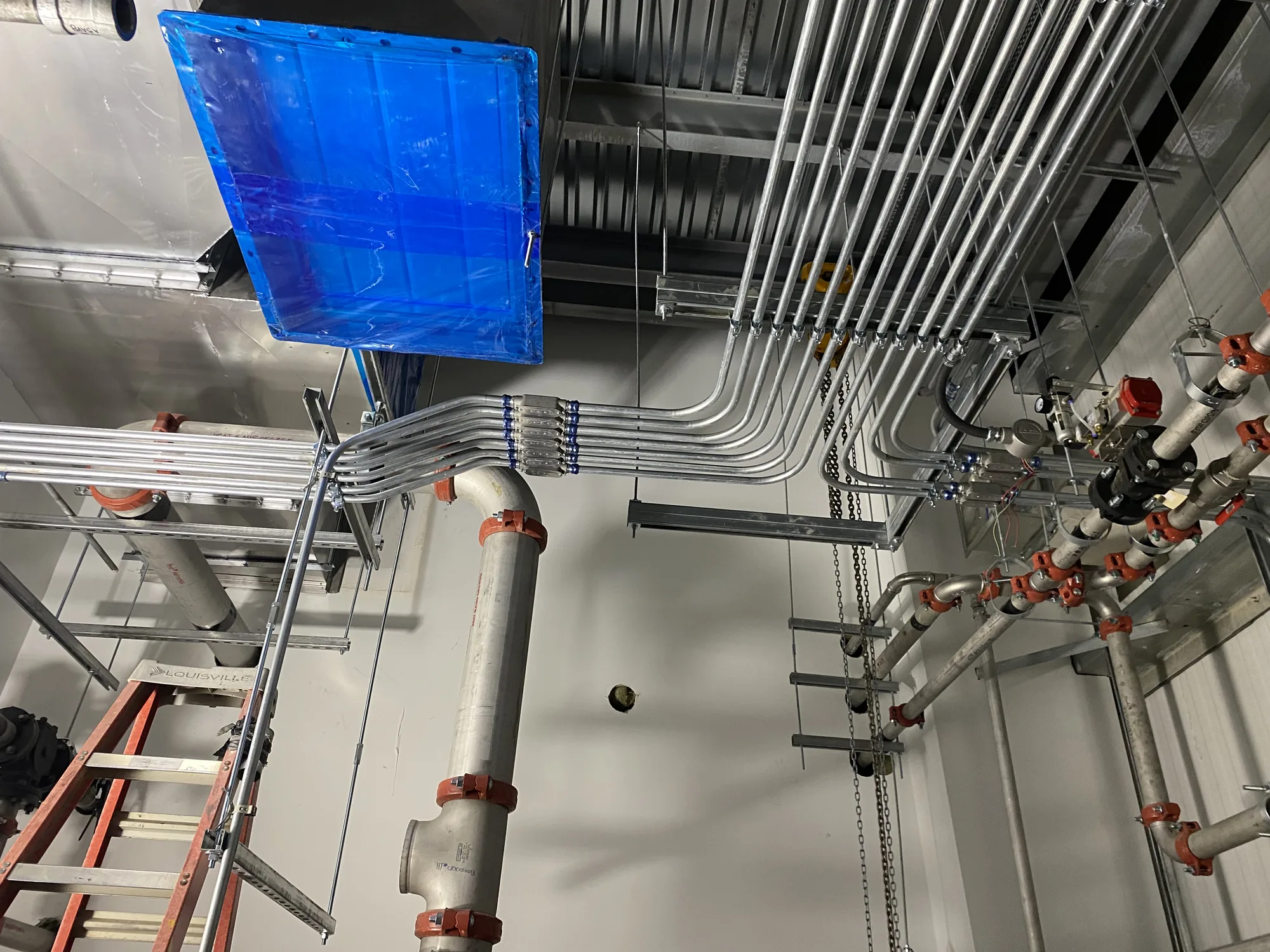
Commercial electrical is its own discipline. The materials are heavier, the loads are larger, the codes are stricter, and the paperwork is its own job. We've spent years in the Alberta oil and gas market, on industrial fit-outs, and on tenant improvement projects across Calgary, Airdrie and the Bow Valley. We bring that experience to every job, large or small.
Our work covers new commercial construction, fit-outs of leased space, lighting upgrades to LED, power distribution upgrades, controls and automation, and ongoing maintenance contracts. We can scope, design-build or work directly from a sealed set. Whichever role you need us in, we hit the schedule and we don't surprise you on price.
Pricing for commercial work starts around $500 for short service calls and scales with the project. For larger fit-outs and new construction, we provide detailed fixed-price quotes broken down by scope so you can see exactly where the money goes. We're set up for hold-backs, progress draws and tier-2 sub-contractor reporting when the GC needs it.
We work around your operating hours wherever possible. If a tenant store needs after-hours work to avoid disrupting trade, we'll be there at 22:00. If a site has a 7 AM start, we'll be there at 6:30. We carry the safety tickets and paperwork (COR-ready, WCB current, $5 M liability) that commercial clients and oil and gas operators require.
Brent Ingard
Super friendly, quick, and knowledgeable. Definitely recommend.
Attila Kasap
Fantastic service getting a Level 2 EV charger installed in my garage. The team was quick, clean, and efficient. When the inspector came to approve the installation, it was done in less than 5 minutes because the electrician had done such an incredible job. Everything looked perfect, which made the inspector's job incredibly easy. I would definitely recommend Navitas for any of your electrical needs!
Ebere Mgbor
I highly recommend Navitas Electric Ltd. They responded swiftly and installation was excellently done. Great job 👏
V B
We had Ross and his crew complete the electrical work on a basement development. They've done great work, been professional and easy to work with. Highly recommend.
Vincent
Ross did a great job sorting out an electrical issue in our house.
Alexandria Bragg
I had a wonderful experience with Navitas Electric! I called them first thing in the morning and they came over very quickly. The service was fantastic, friendly & thorough. I would highly recommend Navitas Electric to anyone in need of electrical work.
Robert McLaughlin
Excellent job!
Derek Heinrichs
Great quality work and skilled staff! Very happy with the work done. Thanks!
N W
I contracted Navitas Electric to install a solar project at my home in Jumping Pound. Ross provided me an all inclusive quote and all changes were discussed and agreed upon prior to any unexpected charges or changes. His final invoice accurately reflected those changes. Ross insisted on doing things correctly and always demonstrated integrity in all our dealings and demonstrated considerable knowledge and experience in solar installations. The first stage of 10 solar panels, hybrid inverter and back-up battery system was operational in Sept 2024 and has been functioning without any issues. All the electrical work is neat, tidy and well placed. I am adding 14 additional solar panels this spring and am looking forward to having Ross complete that installation. Finding an independent Electrician for a solar installation was a huge challenge and I feel fortunate to have found Navitas Electric for this job. I have no qualms in recommending Navitas Electric.Update May 2025 - Navitas just finished the connection of the additional 14 ground mount solar panels. This system is now set up to run my entire household electrical needs on battery power overnights then the next morning the solar panels run the entire house while re-charging the batteries to 100% for the next night. On sunny days this system is providing 99% of all my electrical needs throughout the day and night. The system is also a fully functional emergency backup for when the rural power goes down during those big storms.
We work across the greater Calgary area: Cochrane, Calgary, Airdrie, Bragg Creek, Okotoks, Canmore and Banff. For larger commercial projects we'll travel further into Alberta. If you're outside our usual coverage just give us a call on (403) 466-2338 and we'll let you know what works.
Ross has over 15 years on the tools, with experience in both UK and Canadian electrical work. Navitas Electric was founded in Cochrane to bring that experience into a small, owner-led Alberta business focused on quality residential, commercial and industrial work.
Yes. We work to the Canadian Electrical Code, carry $5 million liability insurance, and keep our WCB account current. We pull permits for every job that needs one and attend the safety codes inspection so you're not left chasing paperwork.
Standard working hours are Monday to Saturday, 07:00 to 18:00. We can arrange evening or weekend work for commercial clients who need it to avoid disrupting trade, and we respond to genuine electrical emergencies outside those hours.
Yes. We do a free site visit for any residential job and most small commercial jobs. We'll assess the work, talk through options, and come back with a fixed-price written quote with no hidden extras. Call (403) 466-2338 or email info@navitaselectric.ca to book one.
We accept e-transfer, bank transfer, all major credit cards and cheque. Residential payments are typically due on completion. For larger jobs we work with staged payments at clearly defined milestones, set out in writing before any work starts.
Most installs are completed within 10 days of you booking, subject to permit turnaround. The on-site work itself is usually a half day to a full day. If your panel needs upgrading first we'll flag that on the site visit so you know the full timeline up front.
Most residential Level 2 installs in our area come out between $2,000 and $4,000, supplied and fitted, including the permit and inspection. The exact number depends on cable run length, whether we're mounting indoors or out, and the brand of charger you go with. Quote is fixed once we've seen the site.
We install all major brands: Tesla Wall Connector, ChargePoint, Wallbox, FLO, Grizzl-E and others. If you already have a unit we'll fit it. If not, we'll talk you through what suits your daily driving, your panel capacity and your budget.
Not always. Many 100 A homes can still take a Level 2 charger if there's enough headroom in the load calculation. We do that math on the site visit. If your panel is at capacity, a service upgrade may be the right call; we'll explain why and what it costs before you commit.
Yes. We install outdoor-rated chargers on driveways, carports, parking pads, multi-unit residential parkades and commercial parking lots across Alberta. Outdoor installs are designed to handle our winters and certified for cold-weather operation.
Common signs: breakers tripping when several appliances run together, a 100 A service when you want to add an EV charger or heat pump, a Federal Pioneer panel (known recall issue), scorch marks or warm spots around breakers, or your insurance company flagging your panel age. A free site visit gives you a clear answer.
Most residential panel upgrades fall between $2,500 and $6,000 depending on your current setup, service size, and any additional work required. We assess your system, give you a fixed price up front so there are no surprises, and coordinate the utility disconnect and inspection on your behalf.
Before we even talk about cost, the main concern with Federal Pioneer panels is safety and insurance. The breakers in these panels have a documented issue where they don't always trip properly under fault conditions. That increases fire risk. If you have one, we recommend replacement for safety reasons, not just capacity reasons.
Most residential upgrades are done in a single day. You're without power for a few hours while we swap the panel, then back on by the evening. The inspector usually attends within the week, and we book that visit and attend it ourselves. You don't need to take a second day off.
Yes. We coordinate directly with the grid operator for your area (FortisAlberta, ATCO or ENMAX) to book the disconnect and reconnect, pull the permit, and book the safety codes inspection. You don't deal with three separate parties, you deal with us.
We do new construction, tenant fit-outs and improvements, lighting upgrades to LED, power distribution, controls and automation, and ongoing maintenance contracts. We've got strong experience on Alberta oil and gas sites and on light-industrial premises, plus retail and office fit-outs across Calgary.
Yes. We're COR-ready, carry $5 million liability, keep WCB current, and our crew holds the standard safety tickets (CSTS, H2S, ground disturbance, fall protection) needed for oil and gas and industrial sites. We can provide the safety package up front for any site that requires it.
Yes. We schedule commercial work around your trading or operating hours wherever possible. That includes after-hours, overnight, and weekend work for retail and hospitality clients who can't take downtime during the day. Just let us know your constraints up front.
Yes. Many of our long-term commercial relationships started with a single service call. Whether it's a tripping breaker in a retail store, a controls fault on a light-industrial line, or a power-quality issue affecting equipment, we're happy to come out, diagnose and fix it.
Commercial service calls typically start around $500 including travel and the first hour on site. There's no project minimum on quoted work; we'll happily look at small jobs and big ones. Anything that needs a permit or design work, we'll scope and quote in writing.
It's very simple. You assign each person their own credential (fob, card or mobile), you decide which doors they can access and at what times, and if someone leaves you just deactivate them. No locksmith, no rekeying, no lost-key drama. We train your admin staff during commissioning.
For most premises with more than two or three users, yes. Access control systems vary depending on door count and reader type, but most small businesses invest anywhere from $1,000 to $10,000 for a basic setup. The ROI shows up fast through avoided rekeying costs, faster admin, and tighter incident logging.
All three of the common types: physical fobs, printed cards, and mobile credentials on a smartphone. Most clients pick a mix; admin staff and contractors often get a fob, members or tenants get a mobile credential. We can change credential types per user without replacing hardware.
In most cases yes. Standard mag-locks, electric strikes and electric latches all integrate with modern access controllers. We assess your existing door hardware on the site visit and tell you exactly what (if anything) needs replacing, and what stays.
Yes. Modern access platforms integrate with video doorbell systems, full IP CCTV, and SIP-based intercom. If you want a single platform that handles entry credentials, video verification at the door, and an audit trail for incidents, we'll scope that on the site visit.
Most residential systems range from $7,000 to $30,000 depending on system size and energy usage. The number that actually matters is your net cost after federal and provincial incentives plus your long-term bill savings; we model both so you can see real payback figures before you commit.
Yes. Alberta is actually one of the better places in Canada for solar because we get a lot of sunshine hours through the year. Cold temperatures also improve panel efficiency, so the cold-but-sunny winter days that frustrate other heating systems are actually a strength for solar generation.
Federal: the Clean Energy Investment Tax Credit. Provincial: various micro-generation arrangements coordinated through your utility (FortisAlberta, ATCO, ENMAX or EPCOR). Programs evolve, so we keep on top of the current list and walk you through what applies to your address on the site visit.
Most residential installs are on the roof in one to three days. Add a week or two for the utility-side coordination: the bidirectional meter swap, net metering paperwork, and inspection. We project-manage all of that, so you have a single point of contact through the whole process.
Yes. We design every system with future expansion in mind. Battery storage can be added later without ripping out the wiring, and a Level 2 EV charger can be integrated cleanly with the solar production. If you're working towards full home electrification, tell us, and we'll design the first install to support the second and third.
Yes. We coordinate the bidirectional meter swap and the micro-generation paperwork with whichever utility serves your address. That's been our default since our first install; we know the process for FortisAlberta, ATCO and ENMAX. You don't deal with the utility directly unless you want to.